A fragment and a copper companion
These two stories don’t begin with a hormone copied into a medicine. One starts with a protein fragment, the other with a peptide that binds copper. The details help us see where the resemblance ends.
Copper in the name
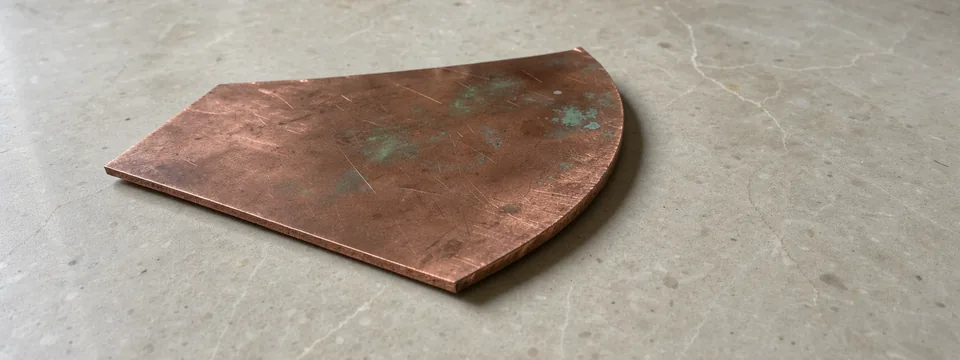
The Cu in GHK-Cu means copper. The metal in the photo is its namesake, rather than evidence about skin. For that, we need to look at what researchers actually tested.
A stomach-protein sequence and BPC-157
Origin · A stomach-protein fragment
BPC-157 is described as coming from part of a protein in human gastric juice, the fluid in the stomach. That’s the origin story. It doesn’t make BPC-157 a naturally circulating messenger.
This is a different relationship from the one between GLP-1 and semaglutide. “Related to something in the body” can mean quite different things.
Adaptation · Synthetic BPC-157
BPC-157 is a synthetic fragment. Most repair findings come from animals. A review of the evidence found very little human research and a lack of large, rigorous trials.
An animal result can be interesting without answering what happens to a person with an injury. The missing human evidence is a real gap.
What the relationship cannot establish. BPC-157 isn’t FDA-approved. Long-term human safety is unknown, and the stomach connection doesn’t establish a safe healing treatment.
GHK and its copper companion
Origin · GHK
GHK is a peptide made of three protein building blocks. It’s found naturally in human fluids and binds copper to form GHK-Cu. The GHK review explains that connection.
Adaptation · Cosmetic and research contexts
You may meet the name copper tripeptide-1 in skincare. In a study of cells grown in a lab, GHK-Cu increased collagen production. Those were connective-tissue cells, rather than people using a cream or an injection.
Cosmetic use is a separate context. FDA’s cosmetic rules differ from drug approval; a familiar skincare ingredient isn’t automatically an approved medicine.
What the relationship cannot establish. GHK-Cu has no FDA-approved drug use. FDA flags possible immune reactions and limited human safety information for injections. Skin-cream findings don’t answer that safety question.
A withdrawn request isn’t a green light
On the FDA page current as of April 22, 2026, BPC-157 and injectable GHK-Cu are listed as “nominated but withdrawn”. The groups that requested review took those requests back. FDA still lists safety concerns.
That isn’t clearance, Category 1 placement or approval for compounding. FDA gives no withdrawal date for either entry. The date above belongs to the page, not to a decision about either substance.
For an injury or skin concern, a licensed U.S. clinician can assess what fits, including approved treatment where appropriate. The origin story can help explain a name. It can’t do that assessment.